

Pepper launches its GEO platform to track how enterprises show up in AI search
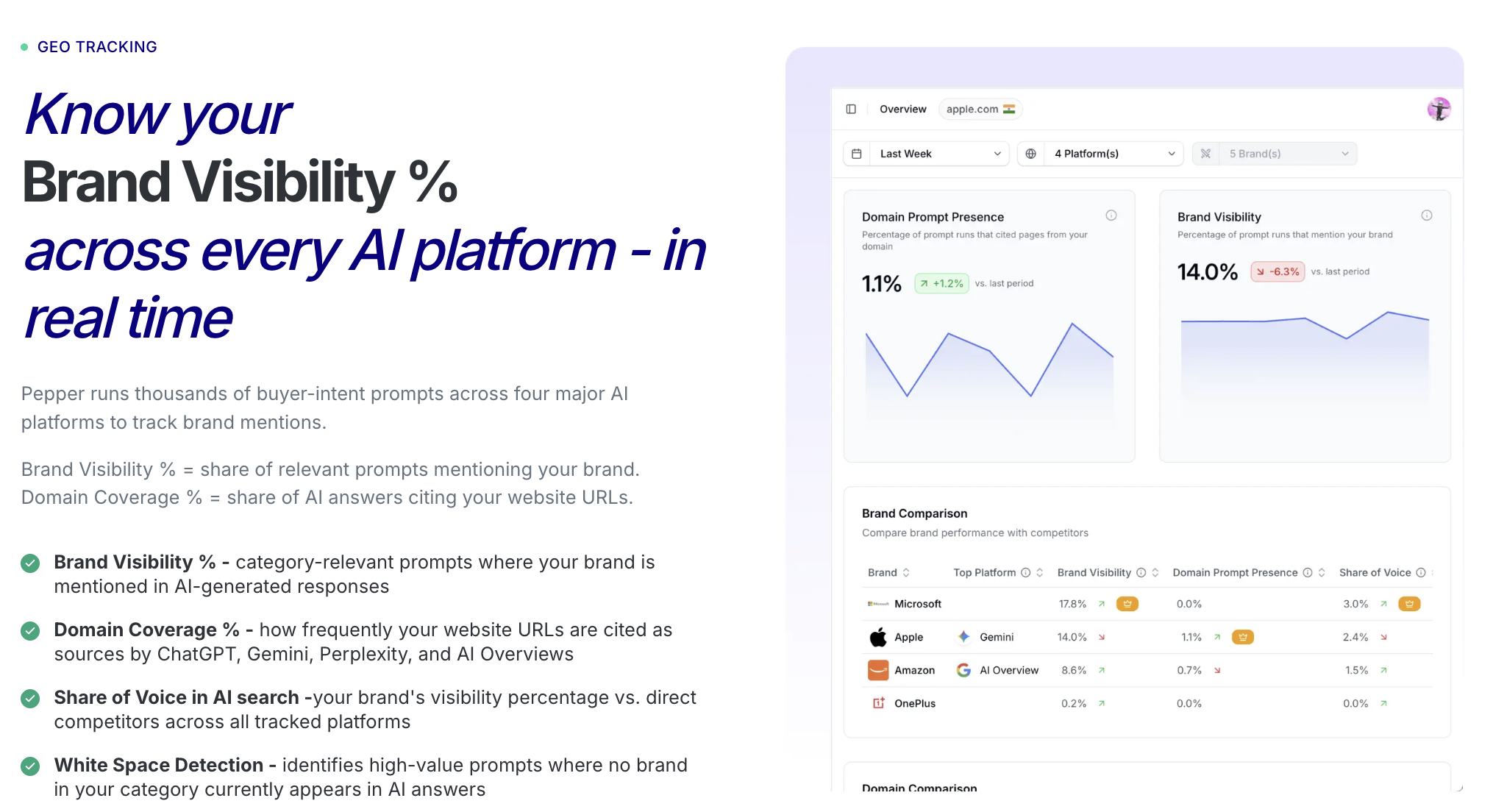
Track Your Brand's AI Visibility
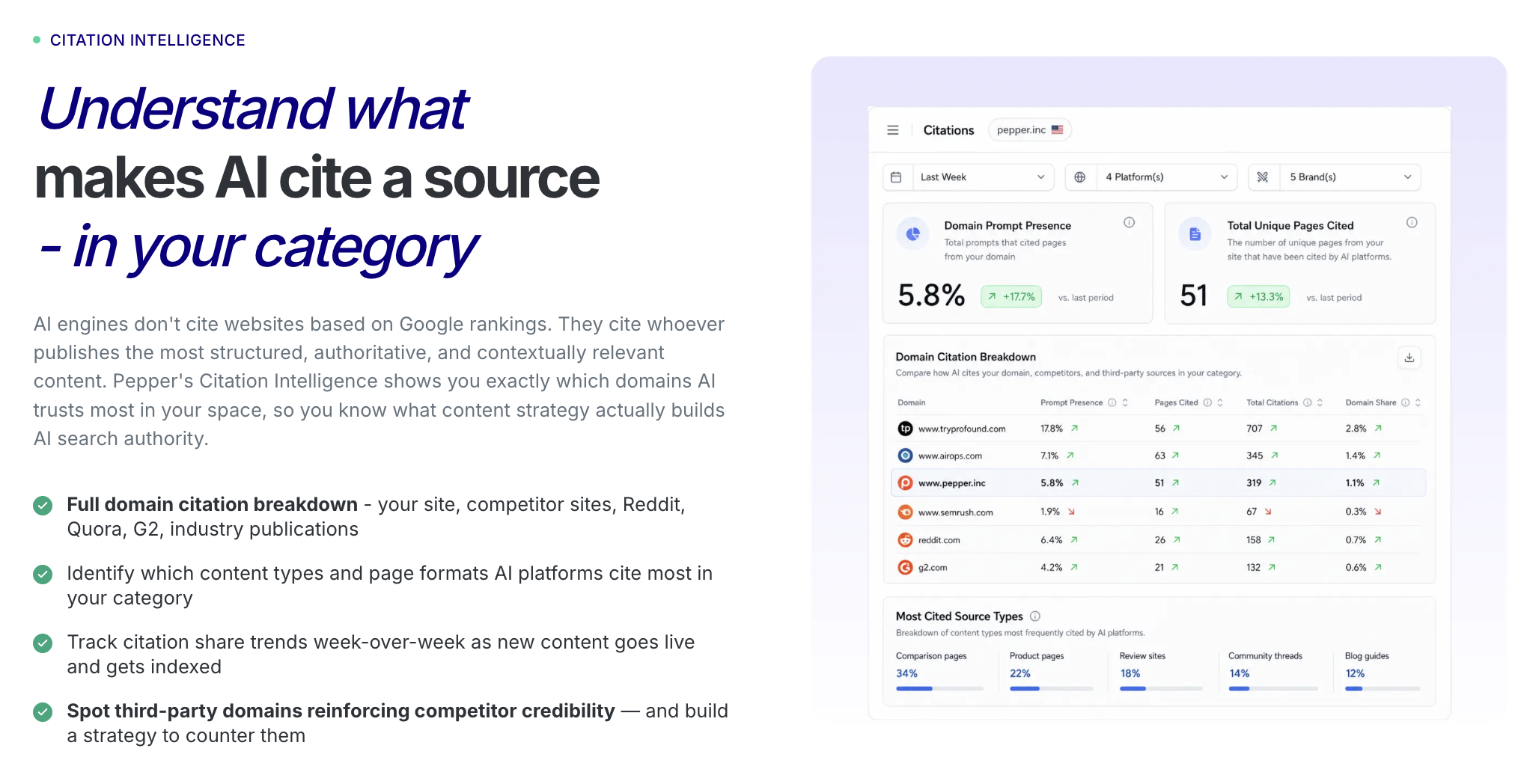
Citation Intelligence
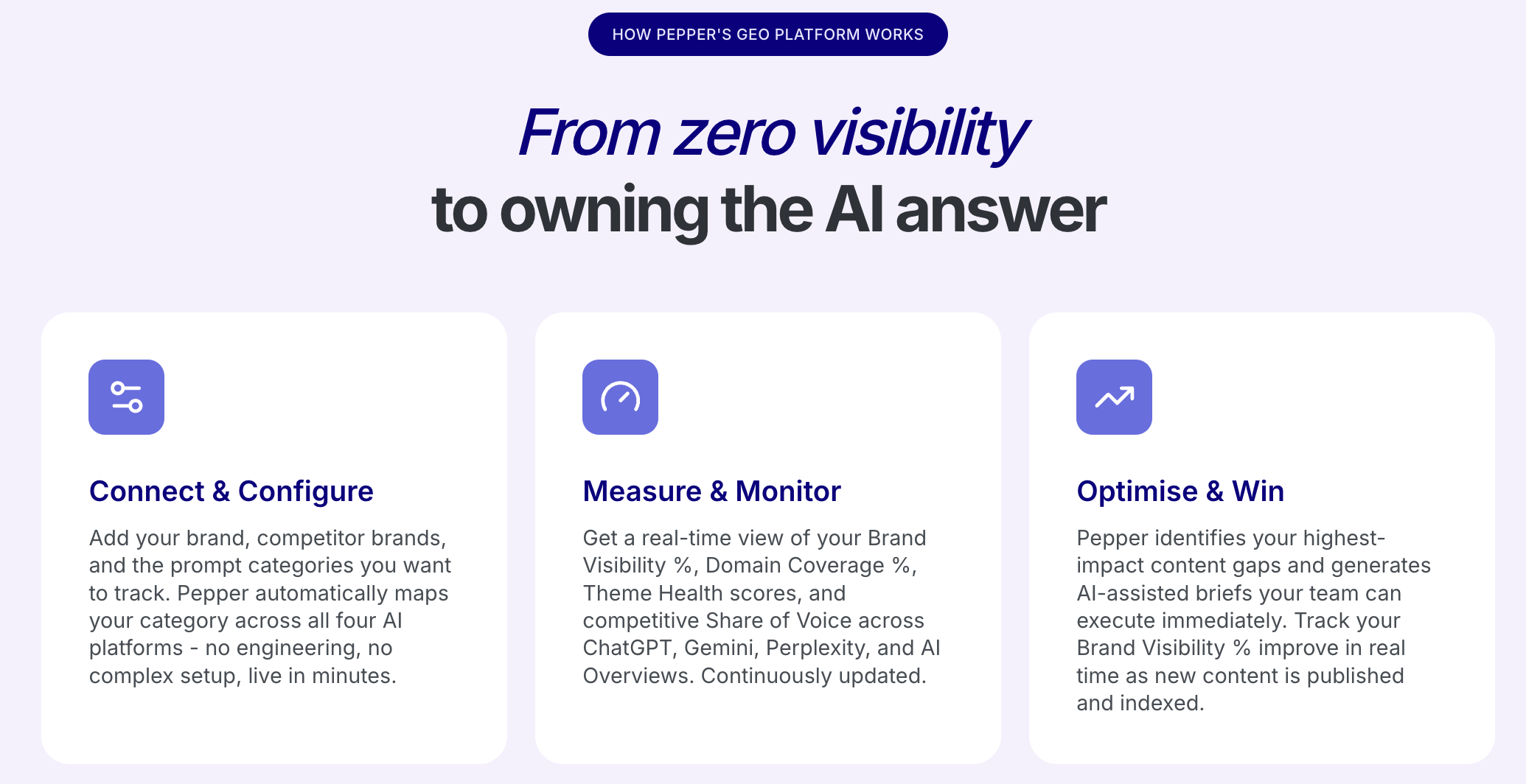
Why Brands Choose Pepper?
Built with 250+ enterprises, Pepper’s GEO platform shows where brands appear in AI search, why competitors win, and what to do next.
SAN FRANCISCO, NJ, UNITED STATES, July 24, 2026 /EINPresswire.com/ -- Pepper has launched a generative engine optimization platform designed to help enterprises measure how their brands appear across AI search platforms, including ChatGPT, Claude, Perplexity, Gemini, and Google AI Overviews.
The platform was developed over the past year through Pepper’s work with more than 250 enterprises. It analyzes buyer prompts across major AI engines, tracks changes over time, compares brand visibility against competitors, and identifies the sources cited in AI-generated responses.
The launch reflects a broader shift in digital discovery, as more users rely on generative AI tools for recommendations, comparisons, and category research. In many cases, brands may continue to perform strongly in traditional search while appearing less frequently in AI-generated answers.
Pepper’s platform is intended to address that gap by giving marketing teams a structured view of their performance in generative search.
Platform capabilities: The platform includes several core areas of analysis.
1. Brand Visibility measures how often a brand is mentioned in AI-generated responses. Domain Coverage tracks how often the brand’s owned pages appear as cited sources across relevant buyer prompts.
2. The platform also identifies which third-party websites, competitor pages, and review platforms are being cited by AI engines. This allows enterprises to understand not only whether a brand appears, but also which sources are shaping how that brand is represented.
3. Themes and Prompts organize queries by persona, topic, and stage of the buyer journey. This helps teams assess which conversations they are currently winning, where competitors are more visible, and where information gaps may exist.
4. The platform’s optimization layer translates those findings into a ranked set of recommended actions. Each metric can also be traced back to the underlying AI-generated response for further review.
Developed through enterprise deployments: Pepper’s GEO platform was initially developed as an internal operating system for the company’s enterprise client work. The product was refined through live deployments across multiple sectors and is now available as a standalone platform.
According to Pepper, the system has analyzed more than 10 million prompts across major generative search engines.
“The brands feeling this shift first are large enterprises, the ones with the most to lose when an AI answer leaves them out,” said Anirudh Singla, Founder and CEO of Pepper. “We built our GEO platform while running GEO programs for some of the largest companies in the US and India. It is designed not only to show how AI systems represent a brand, but also to identify the actions required to improve that position.”
Pepper has applied its GEO methodology across markets including the United States, India, and the wider region.
The company has worked with brands across consumer, financial services, technology, and public-scale sectors. These include Central Garden & Pet, LendingClub, ZO Beauty, Coca-Cola, Unilever, ITC, NPCI, PhonePe, and Emirates NBD.
Each engagement has involved different search behaviors, competitive conditions, compliance requirements, and definitions of visibility. Pepper said this range of use cases informed the platform’s current structure.
Measuring AI search performance:
The platform evaluates three primary dimensions of AI search visibility. The first is whether an AI model mentions the brand in response to a relevant query. The second is whether the model cites the brand’s owned website as a source. The third is whether the brand appears consistently across multiple engines, prompt variations, and buyer contexts.
Pepper said these signals are intended to help enterprises distinguish between isolated visibility and sustained presence across generative search.
The company is positioning the platform as part of a broader enterprise workflow that connects analysis with execution. Insights from the system can be used by internal marketing teams or alongside Pepper’s strategy, content, SEO, and GEO services.
Kishan Panpalia
Pepper
+1 415-754-5133
email us here
Visit us on social media:
LinkedIn
Instagram
YouTube
Legal Disclaimer:
EIN Presswire provides this news content "as is" without warranty of any kind. We do not accept any responsibility or liability for the accuracy, content, images, videos, licenses, completeness, legality, or reliability of the information contained in this article. If you have any complaints or copyright issues related to this article, kindly contact the author above.
