

Automated Suturing Devices Market to Reach US$6.2 Bn by 2033, Says Persistence Market Resaerch
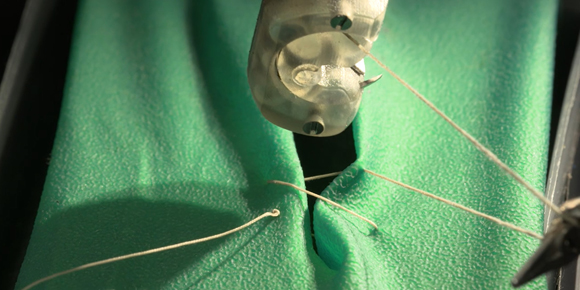
automated suturing devices market
The automated suturing devices market is expanding due to rising surgical volumes, technological advancements, and the adoption of minimally invasive procedures
LONDON, UNITED KINGDOM, February 18, 2026 /EINPresswire.com/ -- The global automated suturing devices market is poised for significant growth, with an estimated market size of USD 3.8 billion in 2026 and a projected value of USD 6.2 billion by 2033. This represents a compound annual growth rate (CAGR) of 5.7% during the forecast period from 2026 to 2033. Several factors are contributing to this rise, including increasing surgical volumes, advancements in medical technology, and the growing preference for minimally invasive and robotic-assisted surgeries.
Download Your Free Sample & Explore Key Insights: https://www.persistencemarketresearch.com/samples/33196
Market Drivers: Rising Surgical Volumes and Adoption of Minimally Invasive Techniques
One of the primary drivers of the automated suturing devices market is the steady increase in global surgical volumes. This trend is evident across various specialties, including cardiac, gastrointestinal, orthopedic, gynecological, and general surgery. The aging global population and the rising prevalence of chronic conditions such as cardiovascular diseases, obesity, and degenerative musculoskeletal disorders have fueled a demand for surgical interventions, increasing the need for more efficient and reliable surgical tools like automated suturing devices.
Technological Advancements in Suturing Devices
Technological innovation has significantly enhanced the functionality and appeal of automated suturing devices. Key advancements include motorized suturing mechanisms, adjustable tension control, ergonomic designs, and the integration of these devices with laparoscopic and robotic surgical platforms. These innovations have not only improved procedural accuracy but also contributed to the reduction of surgeon fatigue, which is particularly beneficial during long or complex surgeries. Furthermore, the shift towards disposable, single-use suturing devices has gained momentum. These devices eliminate the need for reprocessing, improve infection control, and enhance overall operational efficiency, particularly in high-volume surgical settings.
Restraints: High Costs and Adoption Barriers
Despite their growing adoption, the market for automated suturing devices faces several challenges. One of the key barriers is the high cost associated with these advanced technologies. Automated suturing devices, especially disposable and motorized platforms, come with a higher upfront and per-procedure cost compared to traditional manual suturing methods. This price differential can limit their adoption in resource-constrained hospitals or healthcare systems in low- and middle-income countries, where cost containment remains a priority.
Opportunities: Growth of Disposable Platforms and Ambulatory Surgical Centers
The growing shift towards disposable automated suturing devices presents a significant growth opportunity in the market. These devices offer advantages such as enhanced infection control, reduced reprocessing time, and increased procedural efficiency. Disposable suturing devices are especially in demand in high-volume surgical environments where quick turnover and minimal risk of cross-contamination are essential. Additionally, the expansion of ambulatory surgical centers (ASCs) is driving the demand for compact, user-friendly devices that streamline surgical workflows and facilitate same-day discharge for patients.
Get Custom Insights Designed for Your Business: https://www.persistencemarketresearch.com/request-customization/33196
Regional Insights: North America, Asia Pacific, and Europe
North America dominates the global automated suturing devices market, with a projected market share of 45.8% in 2026. The region's growth is driven by high surgical volumes, advanced hospital infrastructure, and the rapid adoption of minimally invasive and robotic-assisted surgeries. Strong reimbursement frameworks and high surgeon awareness of the benefits of automated suturing systems further fuel market growth.
Asia Pacific is expected to be the fastest-growing region, with a CAGR of 7.7% from 2026 to 2033. The increasing prevalence of chronic diseases, expanding healthcare infrastructure, and the growing availability of cost-efficient automated suturing systems in countries like China, India, and Japan contribute to the market's rapid growth in this region.
Europe is also experiencing steady growth, with increasing adoption of minimally invasive techniques and automated suturing devices. Countries like Germany, the UK, and France are leading the way in the integration of advanced surgical technologies into routine clinical practice.
Market Segmentation: By Product, Application, and End-User
By product, the disposable segment is expected to dominate the market, accounting for 63.7% of revenue share in 2026. The growing emphasis on infection control and operational efficiency in high-volume surgical environments drives this preference. The reusable segment, however, is growing at a faster pace due to its lower long-term cost and durability, making it increasingly popular in routine surgeries.
Cardiac surgery is projected to dominate the application segment, driven by the need for precision and secure tissue closure in complex cardiovascular procedures. Additionally, the gastrointestinal segment is growing rapidly, fueled by the rise in minimally invasive abdominal surgeries and laparoscopic interventions.
By end-user, hospitals are expected to hold the largest share of the market, with a revenue share of 56.8% in 2026. Hospitals are primary centers for complex and high-risk surgeries, making them the primary adopters of advanced automated suturing devices.
Checkout Now & Download Complete Market Report: https://www.persistencemarketresearch.com/checkout/33196
Competitive Landscape: Key Players and Innovations
The global automated suturing devices market is competitive, with key players like Johnson & Johnson, B. Braun Melsungen AG, Demetech Corporation, and Conmed Corporation leading the way. These companies are focusing on developing ergonomic, motorized platforms and disposable systems to meet the demands of high-volume surgeries.
Innovations in motorized actuation, improved needle control, and compatibility with robotic systems are driving product differentiation in the market.
Market Segmentation
By Product
Disposable
Reusable
By Application
Cardiac Surgery
Orthopedic
Gastrointestinal
Ophthalmic
Dental
Gynecological
Others
By End-user
Hospitals
Specialty Clinics
Ambulatory Surgical Centers
Others
By Region
North America
Europe
East Asia
South Asia and Oceania
Latin America
Middle East and Africa
Read Related Reports:
Laboratory Developed Testing Market: The Laboratory Developed Testing Market will grow from $9.0Bn (2025) to $13.9Bn (2032) at a 6.4% CAGR, with clinical biochemistry tests holding a 34.2% share.
Intracranial Therapeutic Delivery Market: Intracranial therapeutic delivery market reaches US$4.2 Bn by 2032, supported by innovation in drug delivery systems and rising prevalence of neurological disorders.
Persistence Market Research
Persistence Market Research Pvt Ltd
+1 646-878-6329
email us here
Visit us on social media:
LinkedIn
Instagram
Facebook
YouTube
X
Legal Disclaimer:
EIN Presswire provides this news content "as is" without warranty of any kind. We do not accept any responsibility or liability for the accuracy, content, images, videos, licenses, completeness, legality, or reliability of the information contained in this article. If you have any complaints or copyright issues related to this article, kindly contact the author above.
