

Vibratory Hammer Market Poised to Reach US$ 1,385.9 Million by 2033, Says Persistence Market Research
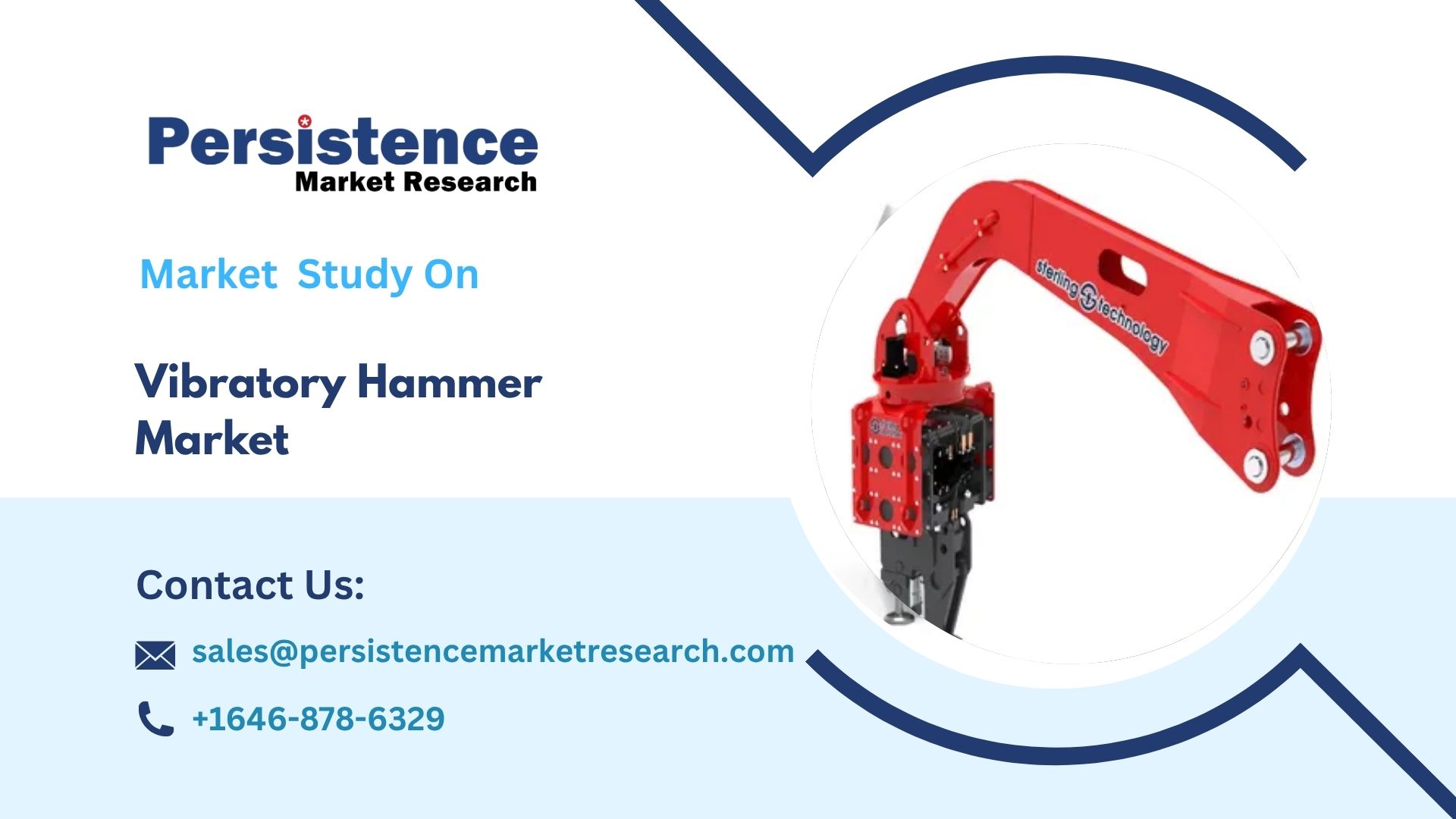
Vibratory Hammer Market
Growth is driven by efficient, low-noise vibratory hammers essential for modern infrastructure projects.
LONDON, UNITED KINGDOM, February 17, 2026 /EINPresswire.com/ -- The vibratory hammer market is a vital segment of the global construction and foundation equipment industry, supporting pile driving and extraction activities across infrastructure, marine construction, and renewable energy projects. Vibratory hammers use vertical vibrations to reduce soil resistance, enabling efficient installation of sheet piles, pipes, and bearing piles with minimal impact on surrounding structures. These systems are increasingly favored over traditional impact hammers due to their lower noise levels, faster operation, and improved environmental compliance. The global vibratory hammer market is anticipated to be valued at US$ 942.6 million in 2026 and is projected to reach US$ 1,385.9 million by 2033, growing at a CAGR of 5.7% between 2026 and 2033.
Market expansion is strongly supported by accelerating global infrastructure investment, projected to reach US$ 94 trillion by 2040, alongside rapid urbanization, with nearly 68% of the global population expected to reside in urban areas by 2050. These trends are increasing demand for deep foundations in transportation networks, ports, bridges, and urban developments. Among product types, hydraulic vibratory hammers dominate the market due to their high efficiency, adaptability, and suitability for large-scale projects. From a regional perspective, Asia-Pacific leads the global market, driven by extensive infrastructure development, coastal construction, and renewable energy investments in countries such as China, India, and Southeast Asia.
𝐃𝐨𝐰𝐧𝐥𝐨𝐚𝐝 𝐅𝐫𝐞𝐞 𝐒𝐚𝐦𝐩𝐥𝐞 & 𝐂𝐡𝐞𝐜𝐤 𝐭𝐡𝐞 𝐋𝐚𝐭𝐞𝐬𝐭 𝐌𝐚𝐫𝐤𝐞𝐭 𝐀𝐧𝐚𝐥𝐲𝐬𝐢𝐬: https://www.persistencemarketresearch.com/samples/25090
Key Highlights from the Report
• The market is forecast to grow at a CAGR of 5.7% through 2033.
• Infrastructure investment is the primary driver of vibratory hammer demand.
• Hydraulic vibratory hammers represent the leading product segment.
• Offshore wind energy projects are creating strong long-term growth opportunities.
• Asia-Pacific dominates the market due to rapid urbanization and coastal development.
• Noise-reduction and automation technologies are reshaping equipment design.
Market Segmentation Analysis
The vibratory hammer market is segmented based on product type, mounting type, and end-user application. By product type, the market includes hydraulic vibratory hammers, electric vibratory hammers, and mechanical vibratory hammers. Hydraulic systems account for the largest share due to their superior power output, reliability, and compatibility with excavators and cranes. Electric vibratory hammers are gaining traction in controlled environments where low emissions and noise are critical, particularly in urban construction and indoor applications.
Based on mounting type, vibratory hammers are categorized into crane-mounted and excavator-mounted systems. Excavator-mounted vibratory hammers are witnessing growing adoption due to their flexibility, ease of mobility, and suitability for confined construction sites. In terms of end-user application, the market serves infrastructure construction, marine and port development, offshore energy, and industrial construction. Infrastructure projects remain the dominant segment, while offshore wind foundation installation is emerging as a high-growth application requiring advanced piling solutions.
𝐆𝐞𝐭 𝐚 𝐂𝐮𝐬𝐭𝐨𝐦𝐢𝐳𝐞𝐝 𝐌𝐚𝐫𝐤𝐞𝐭 𝐕𝐢𝐞𝐰 𝐢𝐧 𝐎𝐧𝐞 𝐂𝐥𝐢𝐜𝐤 : https://www.persistencemarketresearch.com/request-customization/25090
Regional Insights and Market Trends
Asia-Pacific holds the largest share of the vibratory hammer market, supported by large-scale transportation projects, port expansions, and coastal infrastructure development. China leads regional demand through continuous investments in highways, railways, and renewable energy installations, while India’s urban infrastructure programs and smart city initiatives further support market growth. Southeast Asian nations are also contributing through port modernization and flood control projects.
Europe represents a significant market, driven by offshore wind energy expansion and strict environmental regulations favoring low-noise piling equipment. Countries such as Germany, the UK, and the Netherlands are key contributors, particularly in marine construction. North America follows closely, supported by infrastructure renewal programs, bridge rehabilitation projects, and growing offshore wind development along the eastern coastline. Other regions, including the Middle East and Latin America, are gradually expanding as industrial and port infrastructure projects increase.
Market Drivers
The primary driver of the vibratory hammer market is the surge in global infrastructure investment, particularly in transportation, urban development, and coastal protection projects. Rapid urbanization is increasing the need for deep foundations in densely populated areas, where vibratory hammers offer efficient and low-impact piling solutions. Additionally, the expansion of renewable energy—especially offshore wind farms—has created sustained demand for advanced vibratory hammers capable of handling large-diameter piles while meeting environmental and regulatory requirements.
Market Restraints
Despite strong growth prospects, the market faces challenges related to high capital costs associated with advanced vibratory hammer systems. Smaller contractors may struggle with upfront investment, leading to reliance on rental services rather than direct purchases. Regulatory constraints related to vibration control and environmental impact can also limit operations in sensitive areas, while the need for skilled operators and regular maintenance adds to operational complexity.
Market Opportunities
Significant opportunities exist in the development of next-generation vibratory hammers incorporating automation, variable moment systems, and advanced noise reduction technologies. These innovations enhance operational efficiency while ensuring compliance with stringent environmental regulations. The growing offshore wind sector presents a major opportunity, as foundation installation remains a critical and equipment-intensive phase of project development. Additionally, increasing adoption of excavator-mounted vibratory hammers is opening new avenues in urban and inland construction projects.
𝐂𝐥𝐢𝐜𝐤 𝐭𝐨 𝐏𝐮𝐫𝐜𝐡𝐚𝐬𝐞 𝐭𝐡𝐞 𝐅𝐮𝐥𝐥 𝐑𝐞𝐩𝐨𝐫𝐭 & 𝐒𝐭𝐚𝐫𝐭 𝐄𝐱𝐩𝐥𝐨𝐫𝐢𝐧𝐠 : https://www.persistencemarketresearch.com/checkout/25090
Company Insights
Key players operating in the global vibratory hammer market include:
• PVE Piling Vibro Equipment
• ICE International Construction Equipment
• Movax Oy
• Liebherr
• Junttan
• ABI GmbH
Recent developments include the launch of automated vibratory hammer systems with real-time monitoring for vibration and noise control, as well as increased collaboration between equipment manufacturers and offshore wind developers to design high-capacity hammers for large-scale marine foundations.
𝐑𝐞𝐥𝐚𝐭𝐞𝐝 𝐑𝐞𝐩𝐨𝐫𝐭𝐬:
Winches Market : The global winches market is projected to reach US$ 2.8 billion by 2033, growing at a CAGR of 4.2%.
Pump Casting Market: The pump casting market is expected to reach US$ 7.6 billion by 2033, growing at a CAGR of 5.0% driven by precision casting technologies.
Ganesh Dukare
Persistence Market Research
+1 646-878-6329
email us here
Visit us on social media:
LinkedIn
Instagram
Facebook
YouTube
X
Legal Disclaimer:
EIN Presswire provides this news content "as is" without warranty of any kind. We do not accept any responsibility or liability for the accuracy, content, images, videos, licenses, completeness, legality, or reliability of the information contained in this article. If you have any complaints or copyright issues related to this article, kindly contact the author above.
