

Global Clay-Based Cleansing Bars Market Set to Reach USD 3.2 Billion by 2036 as Read the Label Culture Drives 9.2% CAGR
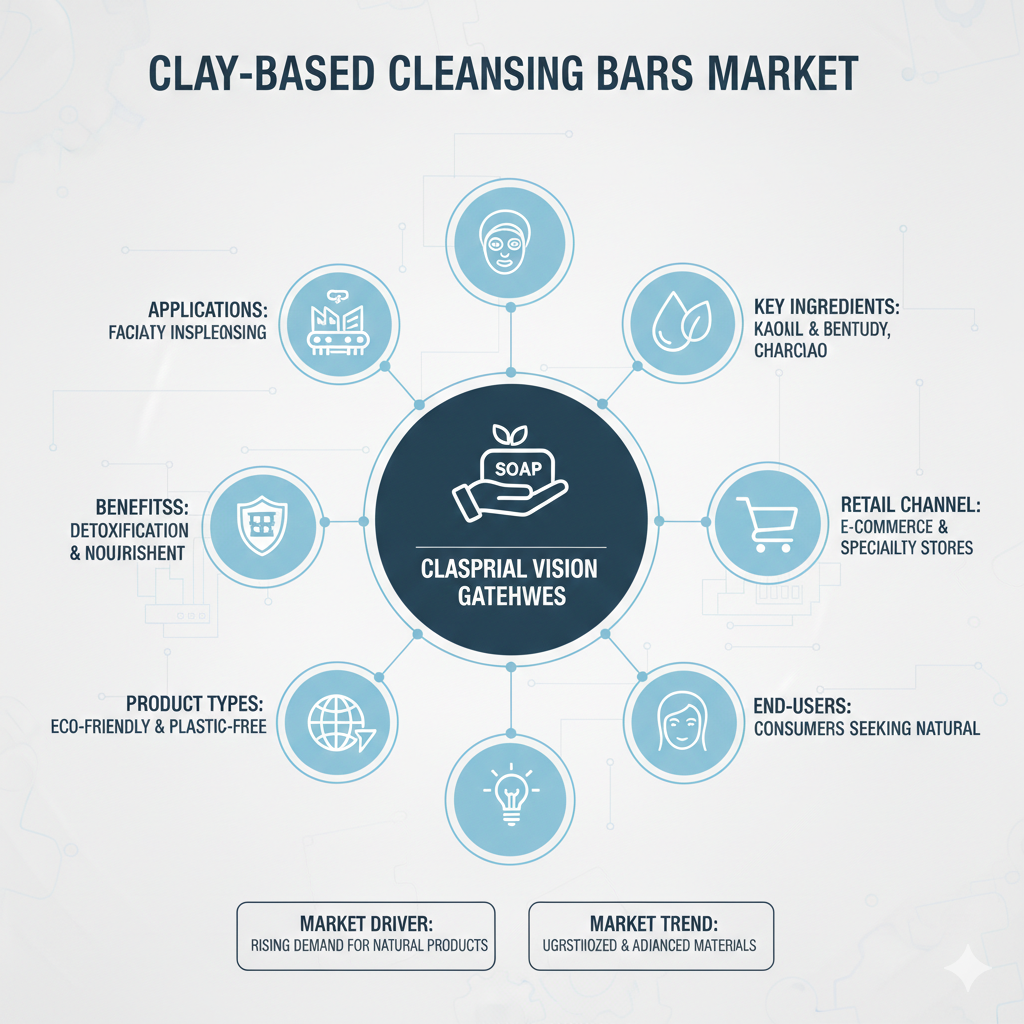
Clay-Based Cleansing Bars Market
clay-based cleansing bars market expanding from USD 1.3 billion in 2026 to USD 3.2 billion by 2036, registering a 9.20% CAGR.
NEWARK, DE, UNITED STATES, February 16, 2026 /EINPresswire.com/ -- The global Clay-Based Cleansing Bars Market is entering a transformative era of growth, with its valuation expected to climb from USD 1.3 billion in 2026 to USD 3.2 billion by 2036. According to latest analysis by Future Market Insights (FMI), a decisive shift toward ingredient transparency and waterless beauty formats is propelling a 9.2% CAGR. As consumers transition from synthetic detergents to barrier-respecting solid cleansers, clay-based bars are being repositioned as treatment-grade solutions rather than mere minimalist substitutes.
Market snapshot: global Clay-Based Cleansing Bars Market 2026 - 2036
• Market size 2026? The market is valued at USD 1.3 billion in 2026.
• Market size 2036? The global market is projected to reach USD 3.2 billion by 2036.
• CAGR? The market will expand at a compound annual growth rate of 9.2%.
• Leading product segment(s) and shares? Hydrating clay cleansers hold a dominant share of 27.60% due to their balance of detoxification and skin comfort.
• Leading ingredient type and share? Natural clay ingredients lead the market with a 48.90% share, reflecting a preference for mineral-based actives.
• Leading region? China holds the largest share, driven by cultural acceptance of mineral skincare and pollution-driven demand.
• Key growth drivers? Rising "read the label" culture, waterless beauty adoption, and the transition toward pH-balanced syndet bars.
• Top companies? Key players include L'Oréal, Olay, Pond’s, Innisfree, Clinique, Neutrogena, The Face Shop, WOW Skin Science, Garnier, and Cardon for Men.
Request For Sample Report | Customize Report | Purchase Full Report
https://www.futuremarketinsights.com/reports/sample/rep-gb-31982
Market Momentum (YoY Path)
The market trajectory follows a consistent upward path as solid beauty moves into the mainstream. Starting at USD 1.3 billion in 2026, the industry is projected to reach USD 1.55 billion by 2028. Momentum accelerates to USD 1.84 billion in 2030 and USD 2.01 billion in 2031. By 2033, the market is expected to hit USD 2.41 billion, ultimately culminating in a USD 3.2 billion valuation by 2036.
Why the Market is Growing
Growth is fueled by a fundamental shift in formulation strategies away from harsh synthetic detergents toward systems that protect skin barrier integrity. FMI identifies a burgeoning "read the label" culture where consumers prioritize clean, recognizable, and plant-derived components like botanical milks and mineral clays. Additionally, the move toward solid-state skincare allows for higher active ingredient density per use, reframing these bars as high-performance, treatment-grade cleansers.
Segment Spotlight
1) Product Type: Hydrating Dominance
Hydrating clay cleansers hold a 27.60% share. These variants succeed by combining the detoxifying power of clay with moisture-supporting oils and milks. This balance addresses the core consumer fear of dryness, making clay-based cleansing bars suitable for daily use across all skin types.
2) Ingredient Type: Natural Purity
Natural clay ingredients command 48.90% of the market. There is deep-seated consumer loyalty toward mineral-based actives perceived as clean and skin-compatible. This dominance is protected by a renewed appreciation for traditional techniques, such as cauldron-cooked artisanal soaps composed of at least 78% vegetable oil.
3) Format: Solid & Waterless
The market is pivoting toward waterless, solid-format adoption. Brands like Ethique have demonstrated that this format can eliminate the need for plastic bottles, saving millions of liters of water and appealing to the eco-conscious "environmental stewardship" agendas of major beauty conglomerates.
Drivers, Opportunities, Trends, Challenges
Drivers: Premiumisation is the primary driver. Consumers are willing to pay more for elevated sensorial experiences and ingredient provenance. The transition from diluted liquid soaps to potent, concentrated solid formulations—like those featuring Amazonian White Clay—is accelerating this trend.
Opportunities: The pivot toward pH-balanced innovation and syndet-based systems represents a massive opportunity. By respecting the skin's acid mantle, these modern bars allow for deep pore cleansing without the irritation traditionally associated with high-alkaline soaps.
Trends: Globally unique trends include the rise of "Solid Beauty" and regional mineral differentiation. Clinically supported claims and rare clay types are becoming the benchmarks for performance, moving the category from basic hygiene to dermo-cosmetic status.
Challenges: Regulatory maturation is a double-edged sword. While clearer frameworks stabilize long-term investment, brands must now navigate explicit verification requirements for sourcing claims and processing transparency to maintain consumer trust.
Competitive Landscape
The market is seeing a convergence of legacy giants and digitally native brands. L’Oréal and Olay (which recently introduced Triple Collagen Peptides) leverage global retail scale and dermatological validation. Meanwhile, Asian specialists like Innisfree and The Face Shop compete on mineral storytelling, and niche players like Cardon for Men target gender-specific oil control. Competition has shifted from price to efficacy proof and ingredient traceability.
Scope of the Report
• Quantitative Units: Revenue in USD Billion; CAGR from 2026 to 2036.
• Segmentation: Product Type (Hydrating, Exfoliating, etc.), Ingredient (Natural, Synthetic), Packaging (Tubes, Jars, Refill packs), and Target Consumer.
• Regions: China, India, Germany, USA, UK (Core Growth Axis).
• Key Companies: L'Oréal, Olay, Pond’s, Innisfree, Clinique, Neutrogena, The Face Shop, WOW Skin Science, Garnier, Cardon for Men.
FAQ
What is the growth outlook for the Clay-Based Cleansing Bars market?
FMI projects a 9.2% CAGR, with the market growing from USD 1.3 Billion in 2026 to USD 3.2 Billion by 2036.
Which country leads the market?
China currently holds the largest share due to strong cultural acceptance of mineral skincare and high demand for oil control in urban, high-pollution areas.
What is a "Syndet Bar"?
It is a soap-free, pH-balanced solid cleanser designed to be gentler on the skin’s barrier than traditional high-alkaline soaps.
Why are hydrating clay cleansers so popular?
They account for 27.60% of the market because they deliver the detoxifying benefits of clay without drying out the skin, making them ideal for daily routines.
Are these products considered "Waterless Beauty"?
Yes, the concentrated solid format eliminates water weight, reducing environmental impact and allowing for higher active ingredient density.
Similar Industry Reports
Cleansing Micelle Technology Market
https://www.futuremarketinsights.com/reports/cleansing-micelle-technology-market
Busbars Market
https://www.futuremarketinsights.com/reports/busbars-market
Solid Cleansing Oils Market
https://www.futuremarketinsights.com/reports/solid-cleansing-oils-market
Sudip Saha
Future Market Insights Inc.
+1 347-918-3531
email us here
Legal Disclaimer:
EIN Presswire provides this news content "as is" without warranty of any kind. We do not accept any responsibility or liability for the accuracy, content, images, videos, licenses, completeness, legality, or reliability of the information contained in this article. If you have any complaints or copyright issues related to this article, kindly contact the author above.
