

Reverse Logistics Market to Reach US$ 1,156.1 Billion by 2032, 4.9% CAGR Driven by E-commerce Growth
Reverse Logistics Market
Rising e-commerce and sustainability initiatives drive global growth in reverse logistics, reshaping supply chain efficiency and product returns.
BRENTFORD, LONDON, UNITED KINGDOM, February 10, 2026 /EINPresswire.com/ -- The global reverse logistics market has emerged as a crucial component of modern supply chain management, driven by the increasing emphasis on sustainability and the rapid growth of e-commerce. Reverse logistics involves the process of moving goods from the end consumer back to the manufacturer or distribution center for reuse, recycling, refurbishment, or proper disposal. Businesses across industries are adopting reverse logistics solutions to reduce environmental impact, enhance operational efficiency, and comply with regulatory standards. The integration of advanced technologies such as AI, IoT, and blockchain is further streamlining the management of returned goods, enhancing transparency, and minimizing losses.
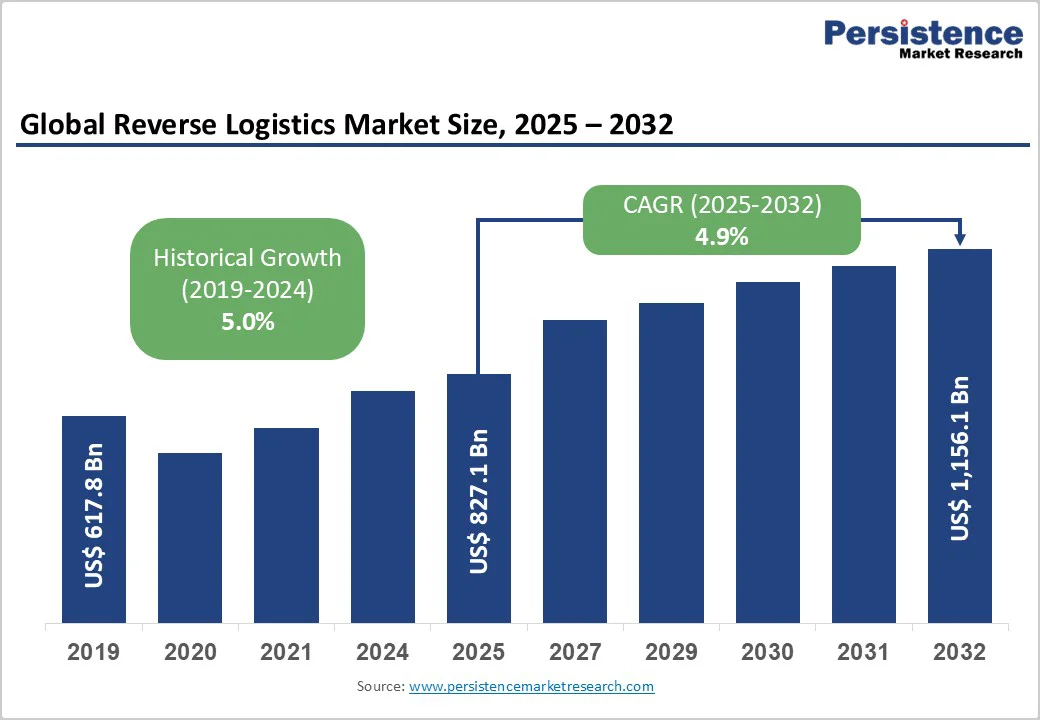
According to Persistence Market Research, the global reverse logistics market size is projected to reach US$827.1 Billion in 2025, expanding to US$1,156.1 Billion by 2032, growing at a CAGR of 4.9% during the forecast period 2025–2032. This growth is driven by several factors, including the proliferation of e-commerce operations, tightening sustainability regulations, and technological advancements in supply chain management. Among segments, the consumer electronics and e-commerce sectors dominate due to high return rates and product lifecycle management needs. Geographically, North America is a leading region, attributed to advanced logistics infrastructure, stringent regulatory frameworks, and the presence of major global players investing heavily in reverse logistics solutions. These trends underscore the growing significance of reverse logistics as a strategic business function in both developed and emerging markets.
Get Your FREE Sample Report Instantly Click Now: https://www.persistencemarketresearch.com/samples/35863
The key players studied in the report include:
• DHL Supply Chain
• UPS Supply Chain Solutions
• FedEx Logistics
• DB Schenker Logistics
• Ryder System Inc.
• Kuehne + Nagel International AG
• XPO Logistics Inc.
• CEVA Logistics
• Nippon Express Co., Ltd.
• Expeditors International of Washington
• Penske Logistics
• Geodis SA
• Yusen Logistics
• DB Group
• Toll Group
Key Highlights from the Report
➤ The global reverse logistics market is projected to grow at a CAGR of 4.9% from 2025 to 2032.
➤ Market value is estimated to increase from US$827.1 Billion in 2025 to US$1,156.1 Billion by 2032.
➤ E-commerce growth is a primary driver of reverse logistics demand across multiple sectors.
➤ Stringent sustainability and environmental regulations are pushing companies to adopt efficient return management systems.
➤ Technological advancements, including AI and IoT, are enhancing supply chain efficiency and product lifecycle management.
➤ North America is expected to remain the dominant region, driven by well-established logistics infrastructure and robust regulatory standards.
Market Segmentation
By Return Type
• Commercial Returns
• End-of-Life Returns
• Repairable Returns
• Recalls
• Unsold Goods/Remanufacturing
• Others
By Service Type
• Transportation
• Warehousing
• Reselling
• Replacement & Refund Management
• Others
By End-User Industry
• E-Commerce
• Automotive
• Retail
• Consumer Electronics
• Pharmaceuticals
• Others
By Region
• North America
• Europe
• East Asia
• South Asia & Oceania
• Latin America
• Middle East & Africa
Customize This Report for Your Exact Requirements: https://www.persistencemarketresearch.com/request-customization/35863
Regional Insights
North America is expected to maintain its position as the leading regional market for reverse logistics, driven by the presence of major e-commerce players, stringent sustainability regulations, and advanced logistics infrastructure. Companies in this region are investing in state-of-the-art facilities and technology to efficiently manage returned products and enhance operational efficiency. The growing awareness of environmental impact and consumer demand for sustainable practices further encourages businesses to adopt advanced reverse logistics solutions.
Europe is another key market, benefiting from strict environmental regulations, high adoption of technology in supply chain operations, and strong consumer awareness regarding product recycling. The Asia-Pacific region is emerging as a high-growth market due to increasing e-commerce penetration, expanding industrial manufacturing, and growing awareness of reverse logistics benefits. Regional investments in logistics infrastructure and sustainability initiatives are expected to create significant opportunities for market players in the coming years.
Market Drivers
The primary driver of the reverse logistics market is the rapid growth of e-commerce and retail sectors. High return rates in online shopping, particularly for electronics, apparel, and consumer goods, necessitate efficient reverse logistics systems. Businesses are focusing on improving customer satisfaction while reducing operational costs through optimized return management and product recovery solutions.
Technological advancements are also fueling market growth. AI, IoT, and blockchain technologies enhance visibility, tracking, and data analysis across the supply chain, reducing losses and improving efficiency. Additionally, tightening environmental regulations are compelling companies to implement sustainable practices, including recycling and refurbishment of returned goods. This regulatory push, combined with corporate sustainability initiatives, is accelerating the adoption of reverse logistics solutions globally.
Market Opportunities
The reverse logistics market offers significant opportunities, particularly in emerging economies. As e-commerce continues to expand, the demand for efficient return and recycling management is expected to rise sharply. Companies can capitalize on this trend by offering innovative solutions such as refurbishment, resale, and sustainable recycling services.
The integration of AI and IoT in supply chain operations provides another opportunity for market players. Real-time tracking, predictive analytics, and automated handling of returned goods can reduce costs and improve efficiency. Businesses that invest in technology-driven solutions stand to gain a competitive advantage, creating long-term growth prospects in a market driven by sustainability and operational efficiency.
Ready to Dive Deep? Buy Full Report Today: https://www.persistencemarketresearch.com/checkout/35863
Frequently Asked Questions
➤ What are the main factors influencing the Reverse Logistics Market 2025-2032?
➤ Which companies are the major sources in this industry?
➤ What are the market's opportunities, risks, and general structure?
➤ Which of the top Reverse Logistics Market 2025-2032 companies compare in terms of sales, revenue, and prices?
➤ How are market types and applications and deals, revenue, and value explored?
Future Opportunities and Growth Prospects
The reverse logistics market is poised for strong growth as sustainability, e-commerce expansion, and technological advancements continue to drive demand. Companies investing in innovative solutions, particularly in refurbishment, recycling, and AI-enabled operations, are likely to capture significant market share. As global awareness of environmental responsibility increases, reverse logistics will play an essential role in shaping sustainable supply chains worldwide.
Persistence Market Research
Persistence Market Research Pvt Ltd
+1 646-878-6329
email us here
Visit us on social media:
LinkedIn
Instagram
Facebook
YouTube
X
Legal Disclaimer:
EIN Presswire provides this news content "as is" without warranty of any kind. We do not accept any responsibility or liability for the accuracy, content, images, videos, licenses, completeness, legality, or reliability of the information contained in this article. If you have any complaints or copyright issues related to this article, kindly contact the author above.
