

RapidFire AI Celebrates Winners Showcasing How to Build Better LLM Applications, Faster
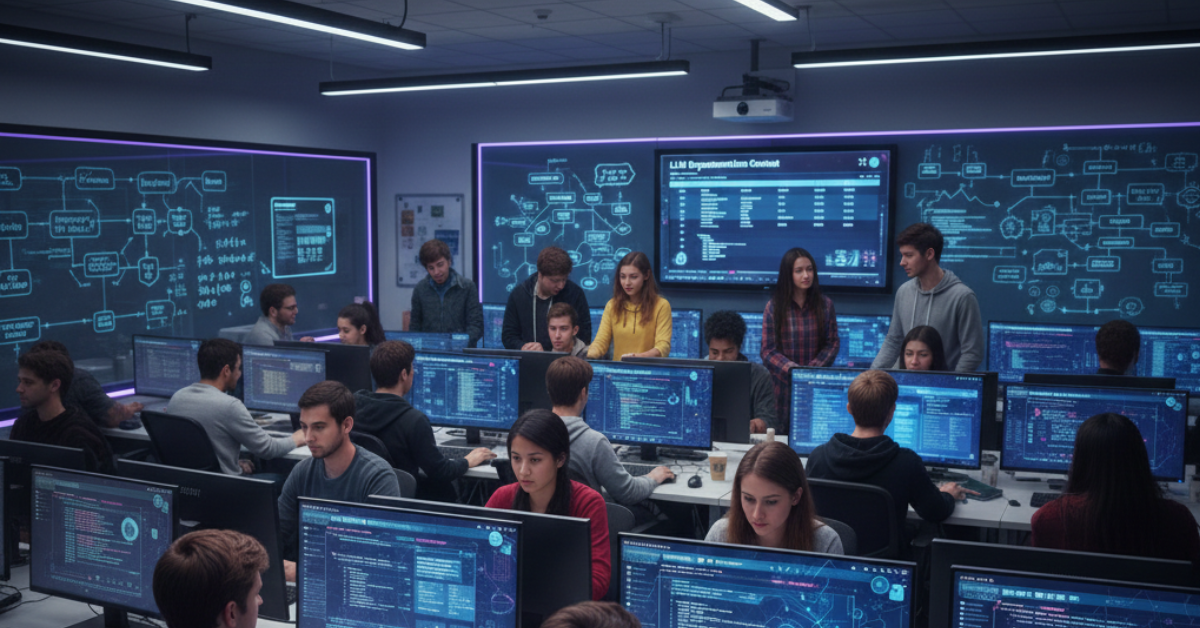
Winners showcased how to build better applications, faster across multiple use cases.
SAN DIEGO, CA, UNITED STATES, February 5, 2026 /EINPresswire.com/ -- RapidFire AI today announced the winners of the RapidFire AI 2026 Winter Competition on LLM Experimentation, an educational, hands-on competition designed to help participants learn modern LLM experimentation workflows to produce a set of high-quality starter notebooks the community can reuse.
“We designed this competition to reward clear, thoughtful experimentation that shows how the process relates to better final metrics, not just ad hoc one-off results,” said Arun Kumar, CTO and co-founder of RapidFire AI. “The winning entries show how impactful it can be for AI use cases when you can run many configurations quickly, compare them cleanly, and iterate toward better outcomes.”
WINNERS
Best RAG Track Submission: Adam Rolander, UC San Diego
A retrieval-first RAG optimization study on the QASPER dataset demonstrating MRR improvement through iterative refinement.
“RapidFire AI made retrieval-first RAG experimentation practical: I could isolate the real ‘knobs’—chunking, retrieval settings, and ranking—then test them systematically in parallel. That tight run-compare-refine loop let me focus on experimental rigor rather than low-level implementation, leading to clear improvements with clean, reproducible analysis.” - Adam Rolander
Best SFT Track Submission: Yuxin Pan, UC San Diego
A child-facing, age-appropriate chatbot to compare SFT configurations and converge on safer, more helpful responses for younger audiences.
“RapidFire AI helped me turn SFT into a disciplined experimentation loop—run many variants, compare deltas, and iterate fast. It made it much easier to converge on a better age-aware fine-tune with confidence instead of relying on guesswork.” - Yuxin Pan
Best Experimental Design: Harshit Bisht, IIT Delhi
A structured SFT experiment to evaluate which fine-tuning choices matter most.
“What I loved about RapidFire AI is how quickly it lets you structure a rigorous experiment—sweep meaningful settings, track the right signals, and iterate. It helped me evaluate PEFT choices for a specialized cybersecurity domain without losing time to experiment overhead.” - Harshit Bishit
Best Dataset Utilization: Nir Nutman, UC Santa Barbara
A course-catalog RAG system and used RapidFire AI to run reproducible experiments grounded in a well-scoped real-world dataset, with clear documentation and practical retrieval-focused comparisons.
"RapidFire AI allowed me to quickly validate how different chunking and reranking strategies handled the dense information in the UCSB Course Catalog. The ability to run these configurations side-by-side turned a complex PDF into a clear, data-driven comparison." - Nir Nutman
Best Convergence Workflow: Yilin Chen, Columbia University
Experiment with a strong “wide-to-narrow” convergence loop in SFT to iterate from broad sweeps to refined runs with clear reasoning and a repeatable optimization workflow.
“What I appreciated most about RapidFire AI was how it made it really easy to try broadly before zooming in. Being able to run configurations in parallel and use stop or clone-modify operations was super helpful when it comes to understanding trade-offs and which design choices actually improved model behavior.” - Yilin Chen
Best Practical Notebook: Suraj Ranganath, UC San Diego
A PII masking/redaction example showing how RapidFire AI supports fast iteration and clean experiment organization for a real applied workflow.
“RapidFire AI made it easy to run LoRA fine-tuning experiments quickly and iterate while they were still in progress. This tight experimentation loop was especially valuable and let me focus on modeling the PII-masking task rather than managing SFT infrastructure.” - Suraj Ranganath
Best Insight / Takeaway: Lalith Sasubilli, UC San Diego
A retrieval-first RAG notebook emphasizing clear learning outcomes and practical takeaways.
“I was able to isolate how retrieval strategy, chunking, embedding choice, and reranking have a larger impact on downstream accuracy than prompting alone. The platform’s ability to run controlled side-by-side evaluations let me iterate quickly, validate hypotheses with data, and build a production-style RAG pipeline rather than a one-off demo.”
REVIEW THE WINNERS
To explore the winning notebooks and learn from the workflows, or try the open source software on your own workflows https://github.com/RapidFireAI/rapidfireai.
RapidFire AI is also available on colab for RAG and SFT. Visit www.rapidfire.ai
ABOUT RAPIDFIRE AI
RapidFire AI is a first-of-its-kind experimentation engine for LLM application development, helping teams run many configurations efficiently even on limited resources, compare and control them in real time, and converge to better outcomes across RAG, agent engineering, fine-tuning, and post-training workflows.
Press@rapidfire.ai
RapidFire AI
email us here
Visit us on social media:
LinkedIn
X
Legal Disclaimer:
EIN Presswire provides this news content "as is" without warranty of any kind. We do not accept any responsibility or liability for the accuracy, content, images, videos, licenses, completeness, legality, or reliability of the information contained in this article. If you have any complaints or copyright issues related to this article, kindly contact the author above.
