

Your top news on business and economy
Provided by AGP
Radiology Information Systems Market to Reach US$2,427.7 Mn by 2032 | Persistence Market Research
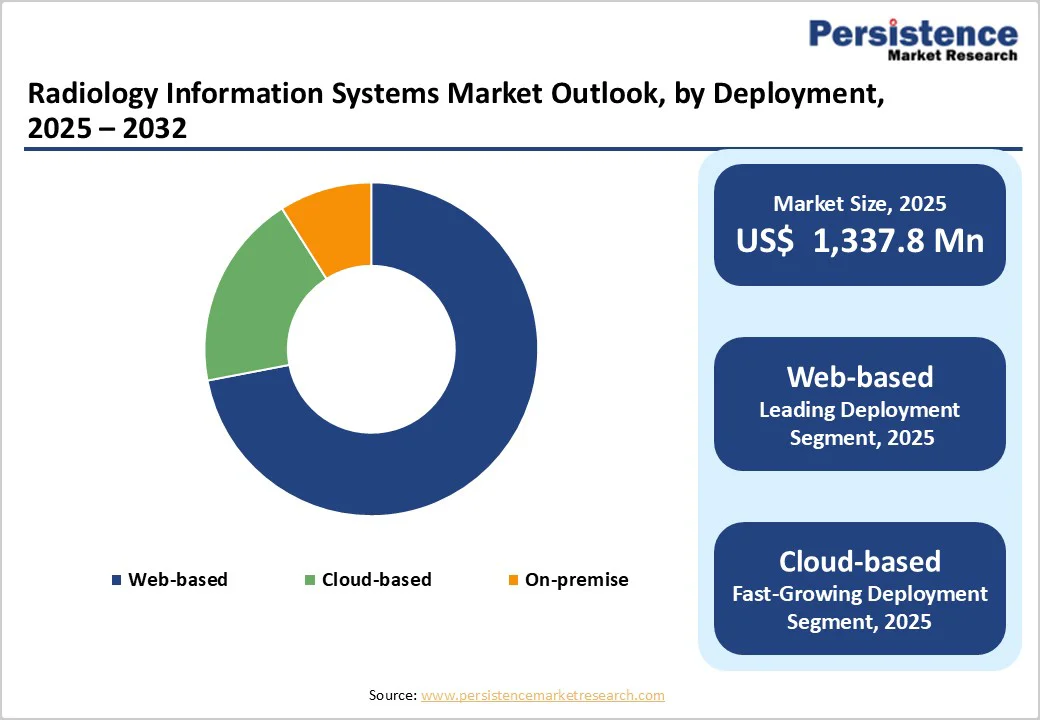
Radiology Information Systems Market
The global radiology information systems market is growing rapidly, driven by AI integration, cloud solutions, and streamlined imaging workflows in healthcare.
LONDON, UNITED KINGDOM, February 2, 2026 /EINPresswire.com/ -- The global radiology information systems (RIS) market is poised for substantial growth in the coming years, with estimates projecting the market size to reach US$ 1,337.8 million in 2025 and expand to US$ 2,427.7 million by 2032, registering a robust CAGR of 8.9% during the forecast period. The surge in healthcare information technology investments, coupled with the rising adoption of cloud-based RIS platforms, is driving the market. These platforms enable seamless image sharing and efficient data management, appealing to healthcare providers seeking to enhance clinical workflows and improve patient outcomes.
Download Your Free Sample & Explore Key Insights: https://www.persistencemarketresearch.com/samples/2816
Key Industry Highlights
North America currently dominates the RIS market with a 42.6% share, supported by advanced healthcare IT infrastructure, rapid AI-enabled workflow adoption, and government initiatives promoting interoperability. Meanwhile, the Asia Pacific region is expected to witness the fastest growth at a CAGR of 11.1%, fueled by the expansion of imaging infrastructure, cloud-based RIS adoption, and radiologist shortages. In terms of components, software leads the market with 51.2% share, driven by AI-powered workflow automation, advanced reporting tools, and integrated PACS connectivity.
Market Dynamics
The RIS market is propelled by technological advancements, AI integration, and the adoption of interoperable systems. The integration of electronic health records (EHRs) and PACS allows centralized management of imaging and patient data, reduces manual errors, and improves patient care. AI-powered platforms automate report generation, optimize case allocation based on radiologist expertise, and detect anomalies, increasing diagnostic efficiency. In June 2024, Konica Minolta Healthcare Americas partnered with Apollo Enterprise Imaging Corp to enhance the Exa® Platform by integrating PACS, RIS, and billing solutions via the cloud-based Apollo Repository for Clinical Content (arcc) using Amazon Web Services’ HealthImaging.
Despite its growth potential, the market faces challenges such as high implementation costs, regulatory compliance, and integration difficulties. Smaller healthcare facilities may struggle with RIS installation and infrastructure costs, while integrating RIS with existing PACS and EHRs can create data silos and workflow inefficiencies. Compliance with HIPAA, GDPR, and other regional regulations requires secure storage, encryption, and access controls. User adoption, training, data migration, and customization limitations further restrict market expansion. Overcoming these challenges is essential for healthcare providers to fully realize RIS benefits.
Opportunities
The RIS market presents significant opportunities through AI-powered workflows, cloud-based solutions, and flexible customization. Platforms adopting HL7 and FHIR standards enable seamless integration with PACS and EHRs, improving workflow efficiency and patient care coordination. Vendors increasingly offer compliance tools, including audit trails, encryption, and role-based access controls, ensuring secure patient data management. Flexible solutions accommodate diverse workflows across hospitals, mobile imaging centers, and specialized clinics, supporting interface modifications, reporting templates, and data field customization. By consolidating imaging and patient data, RIS minimizes manual tasks, enhances data accuracy, and allows departments to handle higher patient volumes efficiently, making AI-assisted, cloud-enabled solutions a growth driver.
Get Custom Insights Designed for Your Business: https://www.persistencemarketresearch.com/request-customization/2816
Category-wise Analysis
Software is projected to capture a leading 51.2% share by 2025, driven by AI-powered reporting, integrated PACS, and real-time imaging access across multiple devices. Web-based deployment dominates with 72.5% share, offering browser-based access, multi-site support, and minimal IT overhead. Integrated platforms combining RIS, PACS, and billing modules account for 68.2% share, improving workflow efficiency, reducing redundancies, and enabling real-time collaboration. Hospitals are the primary end-users with a 73.4% share, leveraging RIS to manage large patient volumes, streamline scheduling, and enhance diagnostic accuracy.
Regional Insights
North America is expected to maintain market leadership with a 42.6% share, supported by strategic partnerships, AI adoption, and regulatory initiatives like the US Health IT Final Rule. Europe holds approximately 29.4% of the market, driven by AI integration, collaborative innovations, and regulatory mandates such as the European Health Data Space. Asia Pacific is projected to grow at 11.1% CAGR, propelled by infrastructure expansion, AI adoption, and radiologist shortages. Initiatives like DeepHealth’s Bengaluru office, SPARK Radiology’s AI reporting platform, and large-scale AI-ready imaging equipment installations highlight the region’s rapid adoption.
Competitive Landscape
The RIS market is highly competitive, with players focusing on AI-driven diagnostics, cloud solutions, and integrated RIS-PACS platforms. Strategic partnerships, technological collaborations, and geographic expansion are key strategies to improve workflow efficiency, ensure compliance, and meet rising demand. Recent developments include RadNet’s acquisition of iCAD for AI-powered breast imaging solutions, and QT Imaging Holdings partnering with Intelerad to deploy cloud-based PACS for radiation-free breast imaging. Major market players include Cerner Corporation, Oracle, GE HealthCare, Siemens Healthineers AG, Konica Minolta, Philips, DeepHealth, Fujifilm, Intelerad, RamSoft, and Epic Systems Corporation.
The global radiology information systems market is set to continue its robust growth, driven by AI integration, cloud adoption, interoperability, and the need for efficient imaging workflows across hospitals and diagnostic centers. As technology advances and healthcare providers increasingly prioritize operational efficiency and patient outcomes, RIS solutions are poised to become indispensable in modern radiology management.
Checkout Now & Download Complete Market Report: https://www.persistencemarketresearch.com/checkout/2816
Market Segmentation
By Component
Software
Hardware
Services
By Deployment
Web-based
Cloud-based
On-premise
By Platform
Integrated
Standalone
By End-user
Hospitals
Ambulatory Surgical Centers
Clinics
Imaging Centers
Others
By Region
North America
Europe
East Asia
South Asia & Oceania
Latin America
Middle East and Africa
Read Related Reports:
X-ray Photoelectron Spectroscopy Market: The global X-ray photoelectron spectroscopy market size is likely to value at US$ 658.2 Mn in 2025 and is projected to reach US$ 1,059.3 Mn by 2032, growing at a CAGR of 7.0% during the forecast period from 2025 to 2032.
Ischemic Optic Neuropathy Treatment Market: Ischemic Optic Neuropathy Treatment Market is projected to grow at a 3.3% CAGR, reaching US$ 286.6 Mn by 2033, driven by rising diabetes cases.
Persistence Market Research
Persistence Market Research Pvt Ltd
+1 646-878-6329
email us here
Visit us on social media:
LinkedIn
Instagram
Facebook
YouTube
X
Legal Disclaimer:
EIN Presswire provides this news content "as is" without warranty of any kind. We do not accept any responsibility or liability for the accuracy, content, images, videos, licenses, completeness, legality, or reliability of the information contained in this article. If you have any complaints or copyright issues related to this article, kindly contact the author above.
